
STORY

War Divides Their Homelands; Christ Unites Them in Cleveland
January 16, 2025
Francis Tuffour
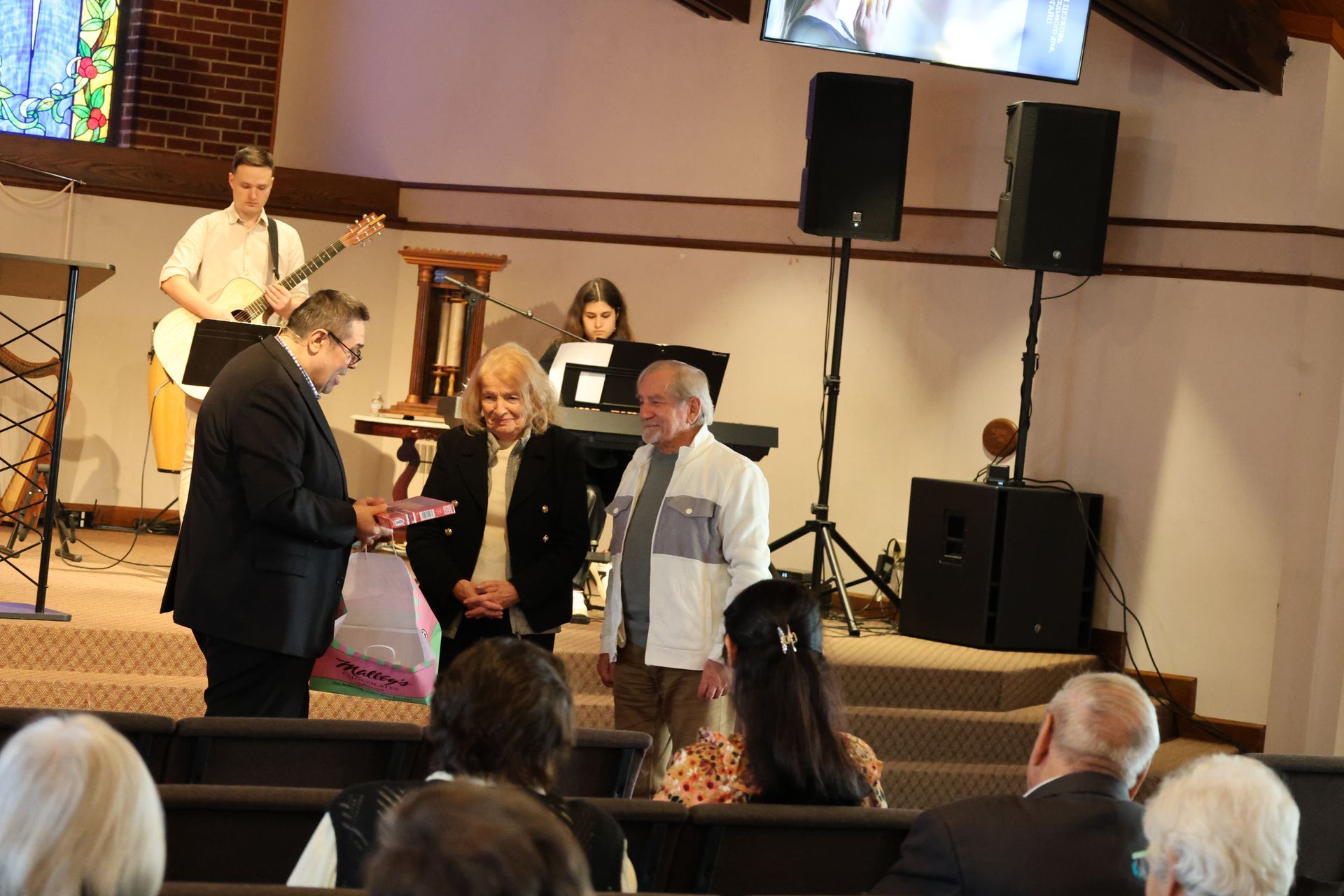
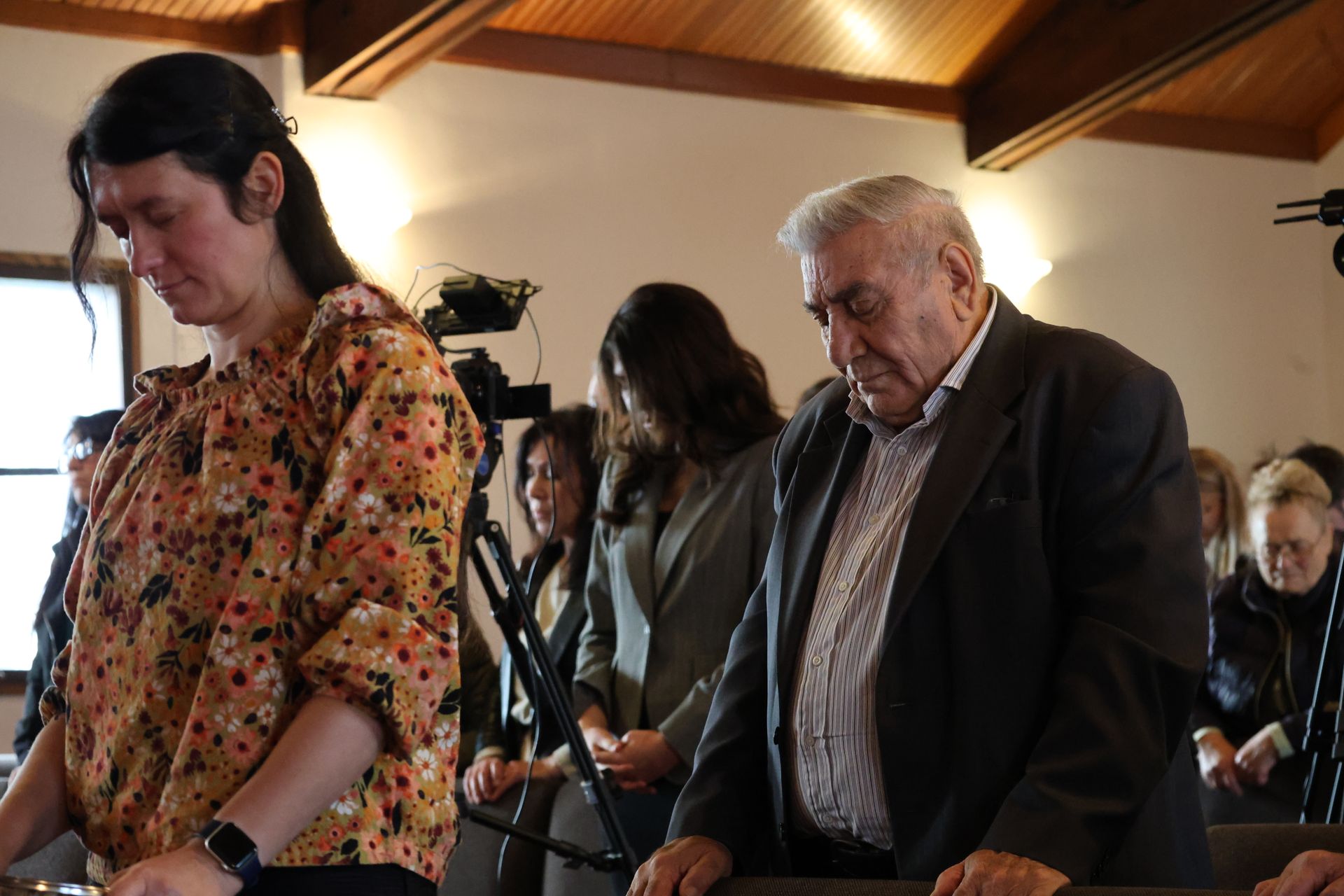
In a small Cleveland church, where worshippers from Russia and Ukraine kneel side by side, peace reigns, defying the war that divides their homelands. This unique congregation sings, prays, studies and fellowships together, with no trace of the painful divisions or hatred that mark their nations' conflict.

The church's story began after Pastor Gennadii Kasap arrived in Cleveland at a challenging time. Before his arrival, there was just a handful of Slavic members in the area—mainly a Ukrainian family who attended a church with only American members. "I arrived in Cleveland on March 10, 2022, just weeks after the war began on February 24," he shares. "Of course, the beginning of the war created certain problems from the very start of my ministry." Having come from Moscow, Russia, Gennadii faced initial resistance to forming Ohio Conference’s Slavic Mission church, however, he believed the congregation's closeness to God would overcome negativity. 

Andriy Skitsko, now one of the Ukrainian members at the church, candidly admits, "At first, I was categorically against being part of a church with a Russian-speaking pastor, especially one from Moscow. I had a bad experience being in the same church with Russians. I envisioned myself either as a member of an American church since I live in America or a Ukrainian church since I am Ukrainian." However, his perspective changed after a conversation with Gennadii. "I saw that the pastor is a truly spiritual person with no imperial superiority," Skitsko shares. After consulting with his wife, they made a pivotal decision: "We decided to support him in his ministry. If this is a human project, it will not succeed, and there will be no Slavic church. But if it is from God, we have no right to refuse to support the pastor. And we were not mistaken." Andriy highlighted Gennadii's selfless ministry and its profound impact on the congregation. Despite not knowing Ukrainian, the pastor tries to learn and sing Ukrainian songs, ensuring that worship services are conducted in both Ukrainian and Russian. For Skitsko, these gestures of inclusion have made him feel welcome and valued. With just a few core members at the start, the church has since grown to more than 40 believers. 


Karina Kolotilina, a Russian church member, consciously maintains a cordial relationship with her Ukrainian fellow worshippers. Acknowledging the language barrier, she shares, "I always try not to hurt the feelings of Ukrainians and show respect for their language, even though I don't understand it very well. I serve in the music ministry, and we regularly sing songs in Ukrainian—a vision of our pastor that I fully support. This ensures that all church members can worship in the language closest to their hearts."

The church has remained a place of unity despite the conflict abroad, a testament to their unwavering focus on Jesus. 


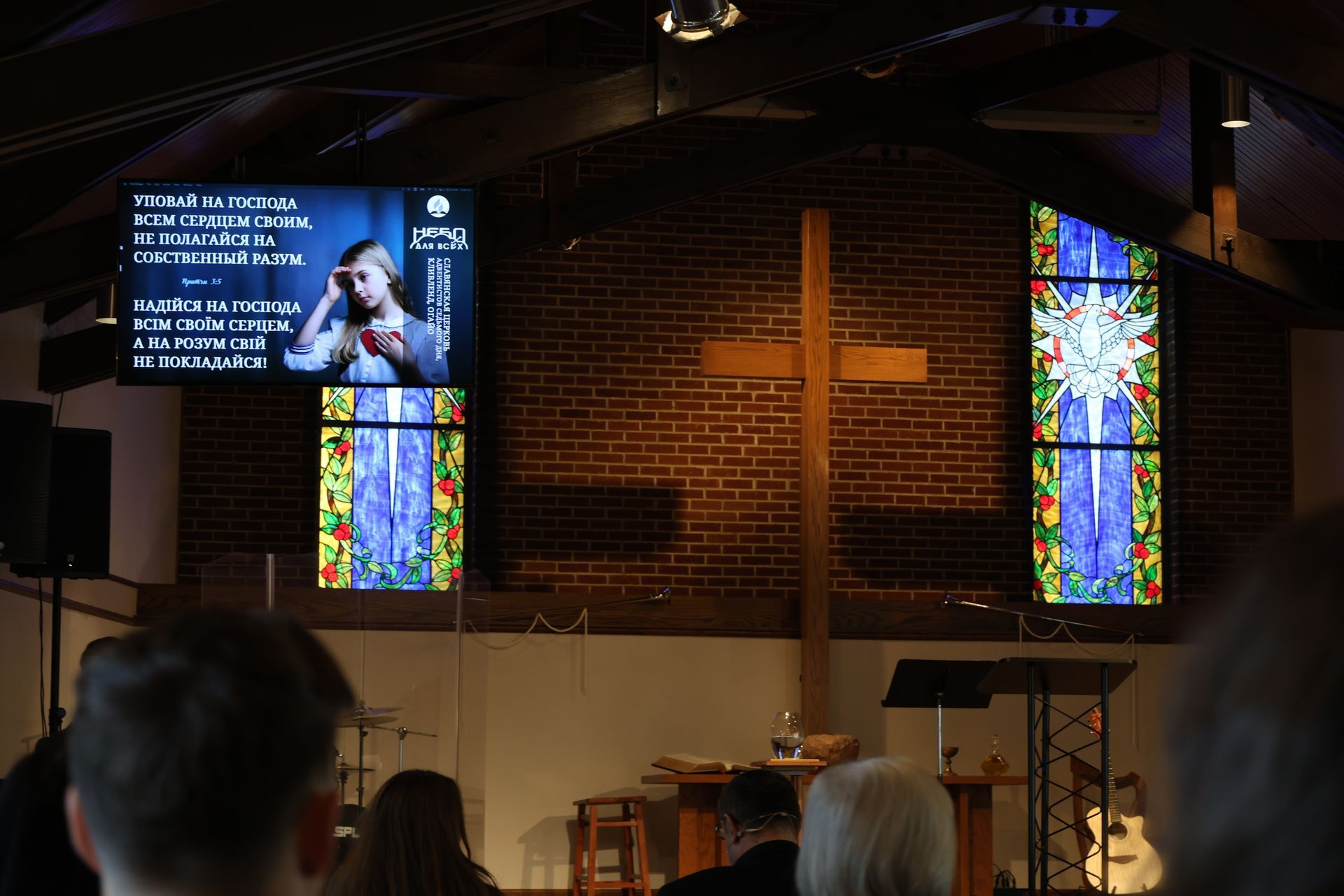
With roughly 50 percent of the congregation being Russian-speaking and the other 50 percent Ukrainian-speaking, the church intentionally fosters inclusivity. Services, slides and congregational songs are conducted in both languages. Remarkably, none of the praise team members speak Ukrainian fluently, yet they try to learn and sing Ukrainian hymns. This effort reflects their shared belief that "heaven is for all." Kristina Kasap, Gennadii's daughter and a praise team member, explains, "Half of the songs we sing are in Russian, and half are in Ukrainian."


Tatiana Druzhenkova, whose family recently arrived in the United States from Russia, expresses deep gratitude for how the church has supported them. Reflecting on the church's unity, she shares that what is happening in this church is an opportunity to show the world that "God has no nationalities."
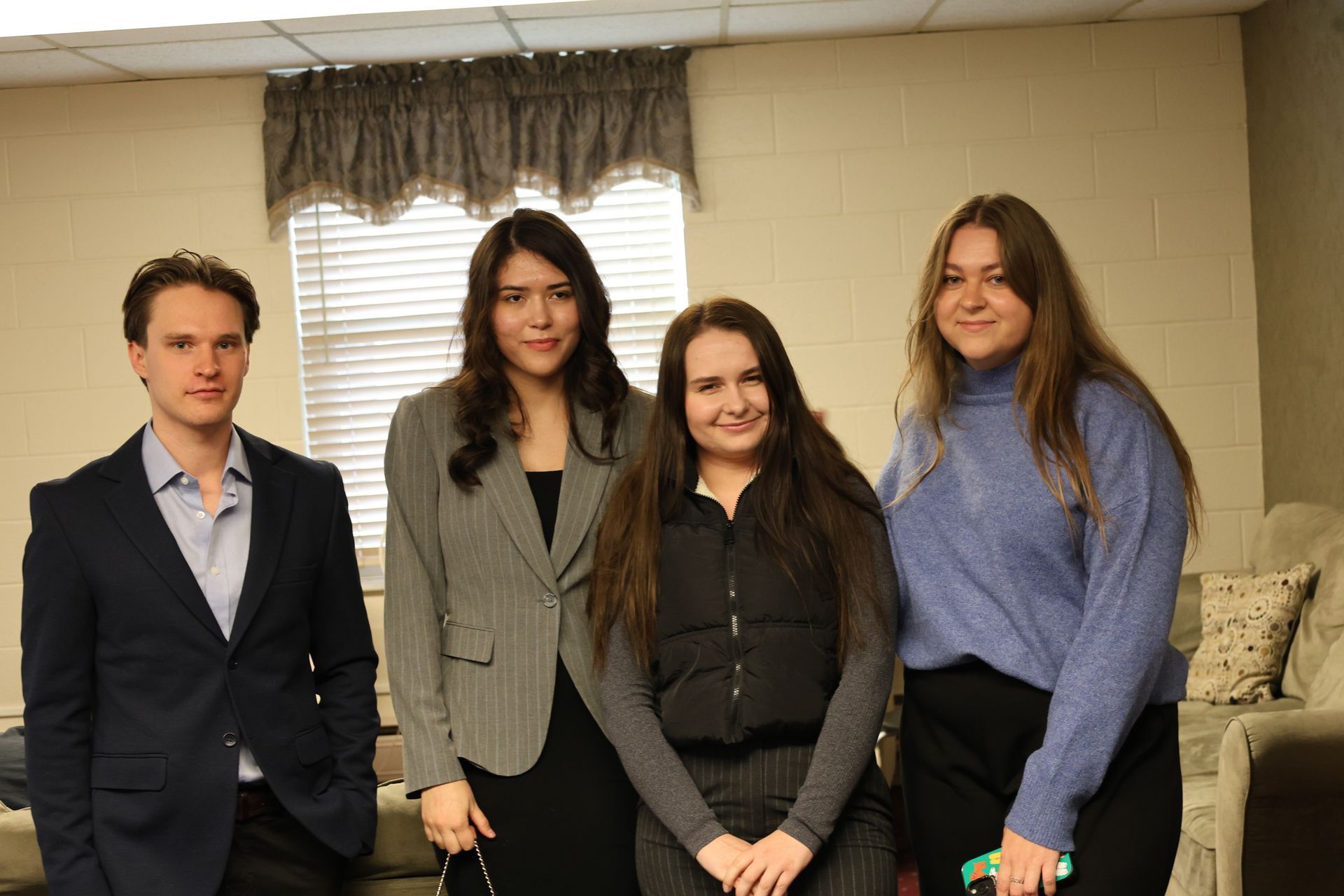

The Christian bond between Russian and Ukrainian members extends beyond the church walls. Gennadii states, "They not only worship together in church but also help each other. Considering that some of our Ukrainian brothers and sisters have been here longer, they often assist the Russian brothers and sisters more. They provide help with food, furniture, jobs and even invite each other into their homes." This sense of unity is further strengthened through the church's initiatives. One such project is a picnic program where members invite friends to socialize over shared meals, aiming to rebuild friendships and foster connections. The church also actively helps newcomers to America adapt to their surroundings, regardless of whether they come from Ukraine or Russia.


In addition to these efforts, Gennadii leads a personal project called "Learning to Drive a Car," which has helped him connect with many individuals while practically showing God's care. The congregation embodies their commitment to unity and compassion through these acts of service and fellowship.

When Vladislav Kolotilin and his family, Russian Seventh-day Adventists, fled their country, they experienced mixed emotions. Reflecting on their journey, Kolotilin shares, "At the end of August 2023, we were forced to leave our beloved city of St. Petersburg due to persecution by the authorities for publicly expressing our religious views and open anti-war stance. We had to abandon our property and business. Despite the uncertainty, we had no doubt that we would be free in America."


Gennadii invited the family to join the Slavic congregation in Cleveland. Kolotilin recalls their initial apprehension: "We felt excitement and anxiety about how we would be received by our spiritual brothers from Ukraine in this congregation. We realized it was hard for some of them to hear Russian speech." However, their fears quickly subsided. "Our acquaintance with the Ukrainian church members exceeded all our expectations. They welcomed us warmly, helped us with food and clothes, and supported us in all our needs." Kolotilin emphasizes the shared history and bonds between Russians and Ukrainians, noting how their countries once co-existed peacefully as neighbors with "similar languages, culture, cuisine and way of life." While the terrible war has divided their nations, he reflects, "It has not divided us in the church. We have the most important thing in common—our heavenly Father."


Sofiia Zaviriukha, a Ukrainian member, speaks passionately about her homeland. "I love my country, and, of course, I want to contribute to its prosperity. The war has affected me deeply, and life feels as though it has been divided into 'before' and 'after.' Terrible things are happening in our country," she says, unable to hide her patriotism and the pain caused by the conflict. Lidiya Zabrecky, another Ukrainian member, reflects with a positive attitude on her experience with the church: "In my church, there are people who came from Russia, but I know they didn't start the war, and they are not supporting it. These people are my brothers and sisters in Christ, children of God in God's big family. I believe that God is the Creator of all people, and He died for everyone."


Vladimir Druzhenkov, a Russian member, believes that his faith has been instrumental in helping him cope with the challenges and emotions brought on by the war. He understands that the Bible foretold that before the second coming of Jesus, there would be wars and rumors of wars. Still, Druzhenkov expresses deep sorrow over the current situation. "Of course, we are very sorry to see that there are full-scale military operations in Ukraine now, and we pray that it will soon stop," he says.


For Druzhenkov, the church family's motto, "Heaven for All," has been a source of inspiration. He credits this unifying message with helping members foster an atmosphere of "friendliness, kindness and a prayerful spirit" within the church.


Gregory Arutyunyan, a retired Adventist pastor from Russia and now a church member, expresses his joy at witnessing the unity among the congregation. "It's amazing to see that all members—Ukrainians, Russians and others—are so united, peaceful and loving toward one another as if there was never a war," he says. He commends Gennadii for his leadership and the good spirit of the members, adding, "I am truly proud to be part of this congregation."

The original version of this story was posted by the Columbia Union Visitor

share this

Related Stories
By Francis Tuffour September 21, 2026
MIDDLETOWN, Ohio — Returning guests and new faces stood together Sunday evening at the Middletown Seventh-day Adventist Church and repeated three declarations: “My mind is ready. My heart is open. And my soul is hungry.” The moment opened another evening of Ignite Ohio, a statewide evangelistic initiative bringing together 28 Ohio Conference churches for simultaneous proclamation and community outreach from September 19–26, 2026. At Middletown, the initiative is becoming more than a week of public meetings. Church leaders say it is strengthening unity among members, introducing the congregation to new people and creating momentum for continued evangelism and discipleship. “We want to serve our community, win souls for the kingdom, build up our church and join the united effort of the conference to move evangelism forward,” said Bill Hrovat, pastor of the Middletown church. Hrovat said the congregation had not undertaken an initiative of this kind in a long time. During the preparation and opening stages of the campaign, he has seen members work together and build stronger relationships. “If nothing else happened, it has been good for the members to work together, build bonds and strengthen unity,” he said. “I believe this is going to bring revival to this church.” Hrovat said he is also encouraged by the new people attending the meetings and the possibility of welcoming them into the life of the congregation.“We’re seeing all kinds of new faces,” he said. “New people joining will bring new life and vitality to our church.” Dr. Bryant Smith, a chaplain at Kettering Health and the Ignite Ohio speaker at the Middletown site, delivered Sunday evening’s message. With “Promise Keeper” as its central idea, the presentation explored Christ’s promised return as a source of hope amid grief, illness and disappointment. Smith began with a warning drawn from everyday experience: “Don’t make a promise that you cannot keep.” People may make commitments in emotional moments, he said, only to break them when their feelings or circumstances change. Using LeBron James’ promise to bring a professional championship to Cleveland as his opening illustration, Smith recalled how the Cavaliers ended the city’s 52-year major professional sports championship drought in 2016. He then directed the congregation to the One he described as “the greatest Promise Keeper the universe has ever known.” Reading from John 14:1–3, Smith emphasized Christ’s assurance: “I will come again.” “Whatever disappointment, whatever hardship, whatever headache, whatever—or whoever—you have lost in this life, it is the promise of God’s soon return that gives us strength and courage to endure,” Smith said. He connected that promise with the realities people face, including bereavement, cancer, other illnesses and dissatisfaction with present circumstances. Christian hope, he said, is grounded not only in what happens in this life but also in Christ’s promise of resurrection, restoration and eternal life. “It stings that I lost somebody near and dear to me, but I’m going to keep going because I have an eternal promise,” Smith said. Contrasting human unreliability with God’s character, Smith cited Numbers 23:19, which declares that God does not lie or change His mind. “People break their promises all the time,” he said. “But when it comes to the promise in John chapter 14, we are talking about a God who does not lie and does not change His mind.” Smith also emphasized that Scripture does not reveal the precise time of Christ’s return. Rather than waiting until the last possible moment to prepare spiritually, he urged attendees to live in a continual state of readiness. “God purposely did not tell us when He is coming again,” Smith said. “He wants us to remain in a state of readiness instead of trying to get ready at the last possible moment.” Drawing from Acts 1, Matthew 24 and Revelation 1, Smith said Christ’s return will not be secret or hidden but personal, public and visible. “This will not be any quiet, secret or little-in-the-corner event,” he said. “This will be the triumphant return of our Lord and Savior.” He concluded this portion of the message with the biblical picture of the last trumpet, the resurrection of those who died in Christ and the transformation of living believers. “What a beautiful scene that will be,” Smith said. “I cannot wait until all the heartache and headache is over. I can’t wait to look at my Savior in His face and see His nail-pierced hands.” In an interview, Hrovat outlined how the church plans to sustain the relationships formed during the series and support participants after the meetings end. The congregation intends to assign spiritual mentors, help newcomers develop friendships within the church, organize social activities and, if possible, establish a class for new members. “If they don’t develop friendships in the church, they often will leave,” Hrovat said. “We’re going to assign a spiritual mentor to each one, have social events, disciple them and give them opportunities to serve.” The church also plans to continue its evangelistic and community-outreach activities after Ignite Ohio ends, involving new members in ministry and helping them grow from recipients of the church’s care into active participants in its mission. For Middletown, Hrovat said, Ignite Ohio is a starting point rather than a conclusion—an opportunity to sustain outreach momentum, strengthen the congregation, and turn new relationships into a lasting community of faith.
By Francis Tuffour September 20, 2026
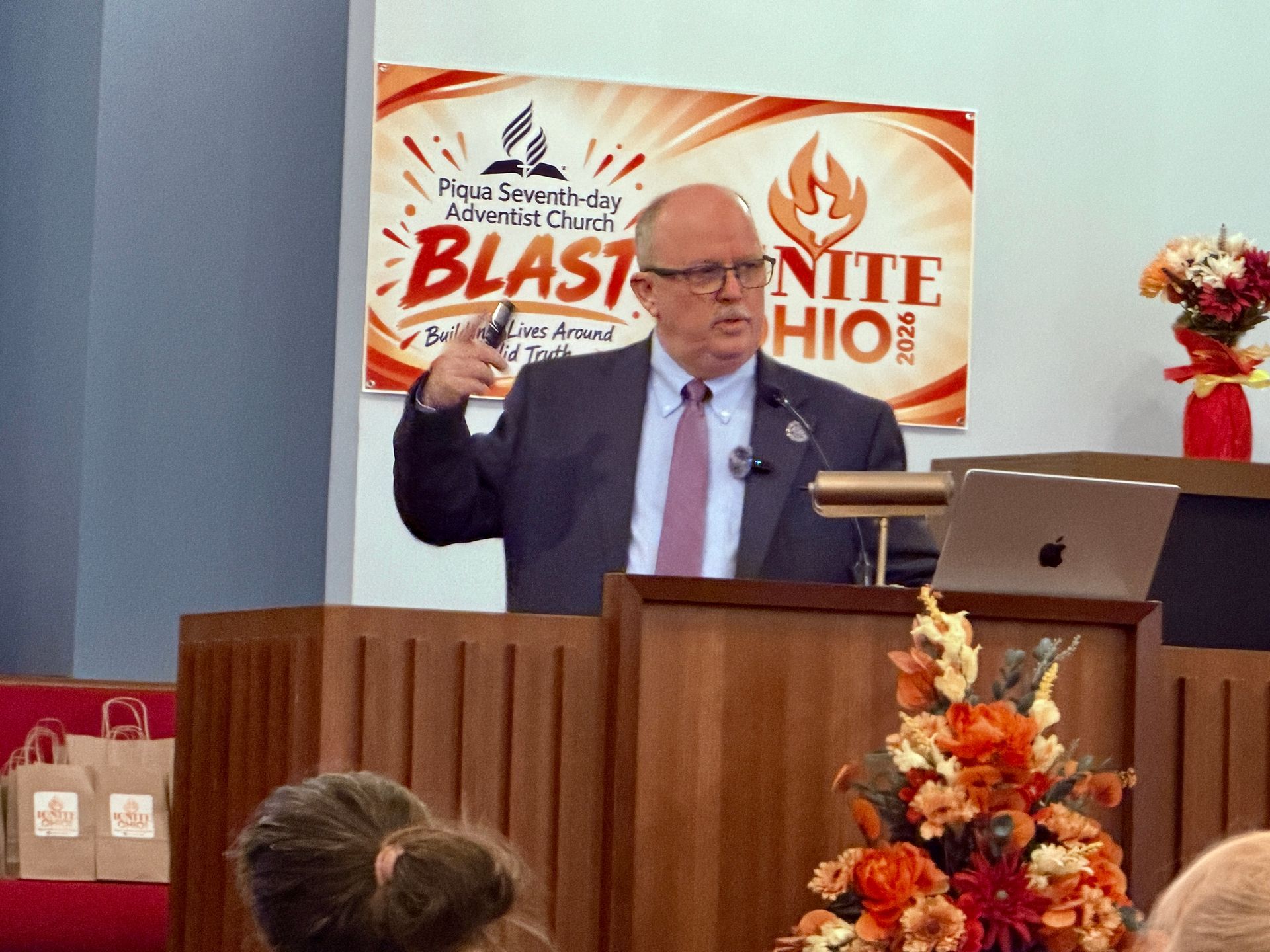
PIQUA, Ohio — The Piqua Seventh-day Adventist Church opened its Ignite Ohio evangelistic series with a message addressing one of humanity's most enduring questions: Why is there evil and suffering in the world? The local series, themed "Hope for a World in Crisis," is part of Ignite Ohio, a statewide evangelistic initiative involving 28 Ohio Conference churches from September 19–26, 2026. The initiative combines biblical preaching, personal evangelism, and compassionate service in communities statewide. The guest speaker for the Piqua series is Elder Kent Sharpe, vice president for finance of the Potomac Conference of Seventh-day Adventists. Although much of his regular ministry involves administrative and financial responsibilities, Sharpe said participating in evangelism reconnects him with the spiritual purpose of his work. In an interview before the evening presentation, Sharpe was asked what motivated him to come to Piqua and share the Word of God with the community. "I spend all week, every week and every month dealing with church problems," Sharpe said. "When I set aside time to go and do evangelism, it is a spiritually refreshing opportunity for me. It reminds me why I am a Seventh-day Adventist. It rejuvenates me." Sharpe said he intentionally tries to conduct at least one evangelistic series each year. For him, success should not be measured solely by the number of baptisms but also by whether the gospel is faithfully presented, questions are answered, and local members become actively involved. "Yes, we want baptisms, but that is the work of the Holy Spirit," he said. "Our job is to invite people, share the gospel with them, and answer their questions. Our job is not conversion." He emphasized that the congregation's presence and participation are essential to creating a welcoming environment for visitors. Members, he said, should attend consistently and personally invite their friends. "Why should you invite your friend to come to something you're not going to?" Sharpe asked. During the evening presentation, Sharpe explored the biblical origin of evil, tracing the conflict from the rebellion in heaven to Adam and Eve's choices. He explained that humanity's rejection of God introduced guilt, fear, broken relationships, and death into the world. "We have been hiding ever since," Sharpe said. "Sin produces separation between God and us. It produces conflict and separation between each one of us." Using Jesus' parable of the wheat and weeds, Sharpe distinguished God's work from the suffering caused by evil. In the parable, a man plants good seed, but an enemy later sows weeds among it. "God planted good seed," Sharpe said. "He didn't sow seeds of suffering, sickness, and death. The Bible constantly identifies the enemy as Satan—the adversary." Sharpe then shifted from the origin of evil to God's response through Jesus Christ, assuring those attending that no one is beyond the reach of divine love. "There is no valley too deep, no pit so dark where God's love cannot reach you," he said. "There is no place you can run where God's love cannot reach you." Responding to the question of why God does not intervene against evil, Sharpe pointed to Christ's life, death, and resurrection. "Why doesn't God do something? He did," Sharpe said. "He entered this world with all its evil and fought a decisive battle to defeat Satan for you and for me." He concluded by inviting the attendees to commit or recommit their lives to Christ. Decision cards let participants request baptism or rebaptism, express interest in joining the Seventh-day Adventist Church, request Bible studies, or submit prayer requests. Drake Johnson, a Bible counselor assigned by the Ohio Conference, supported the Piqua series. Johnson said Ignite Ohio's combination of evangelism and practical community service motivated him to participate. "What really intrigued me was the compassion project—the BLAST—and being able to do something like that and affect a community in that way," Johnson said. "When they told me they were doing it all across Ohio, I said, 'Let's dive in. That sounds fun.'" Johnson said he plans to begin each day with personal devotion and prayer before joining local church members in visiting people throughout the community. His approach will build upon relationships that members have already established, including connections developed by a church member who serves as a local firefighter. "One of my major plans is to visit within the community," Johnson said. "I'm going to work with the local church members to reach people they already know and have relationships with." For Johnson, personal evangelism is not merely an assignment but a ministry he genuinely enjoys. "I love going out, talking to people and seeing people make decisions for Christ," he said. "It was a win-win all the way around." He expressed hope that Ignite Ohio's impact would extend beyond Piqua, giving people throughout the state opportunities to hear Scripture, surrender their lives to God, and choose to follow Christ. "I'm expecting this entire series, across all of Ohio, to be a time when people can hear the truth of God's Word, come to Him, surrender to Him, and make the decision to follow Christ," Johnson said. Through biblical preaching, community relationships, compassionate service, and personal follow-up, Piqua's leaders and visiting ministry team hope to offer what the series promises: real hope for a world in crisis and a future grounded in Jesus Christ.
By Francis Tuffour September 19, 2026
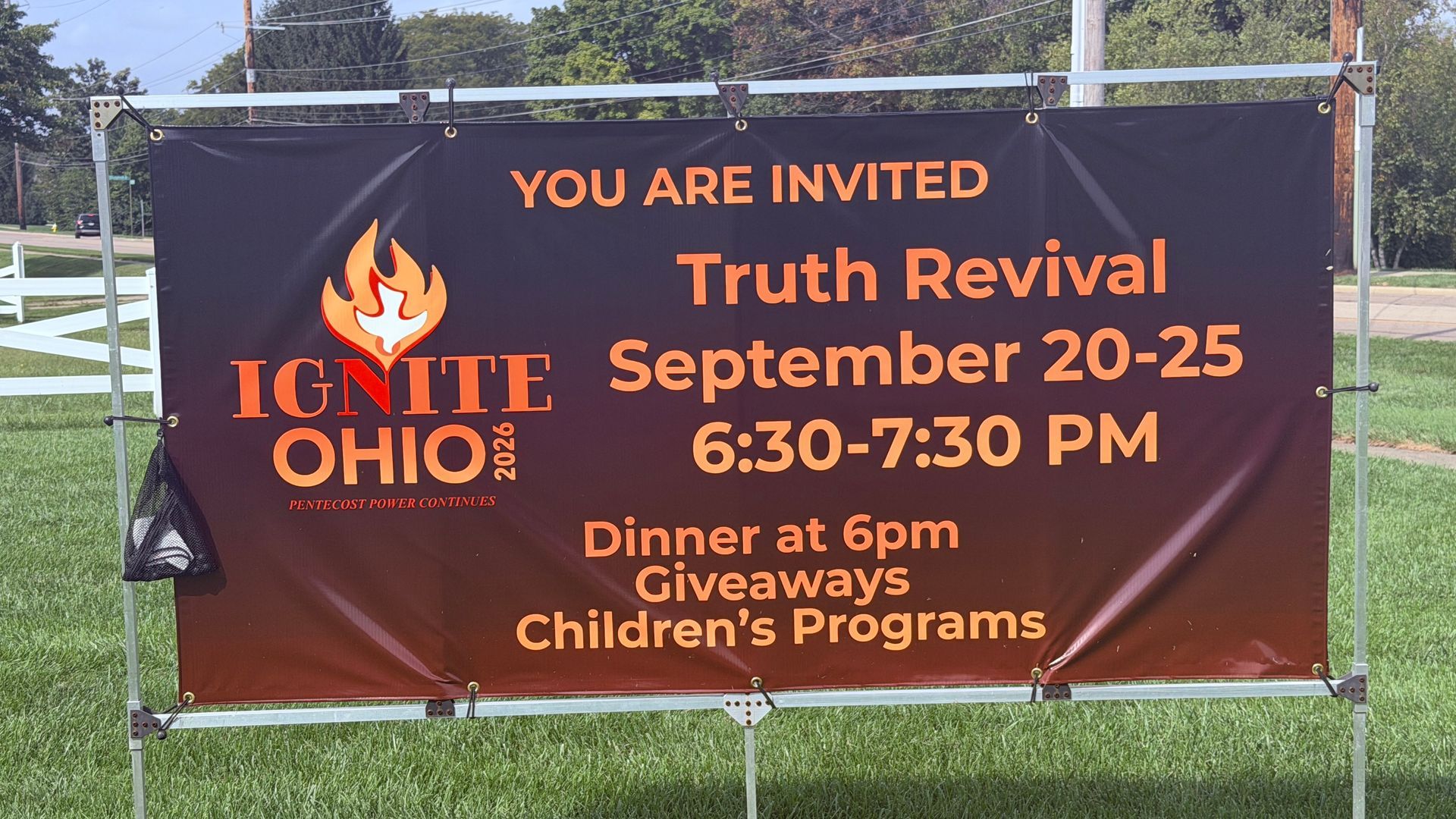
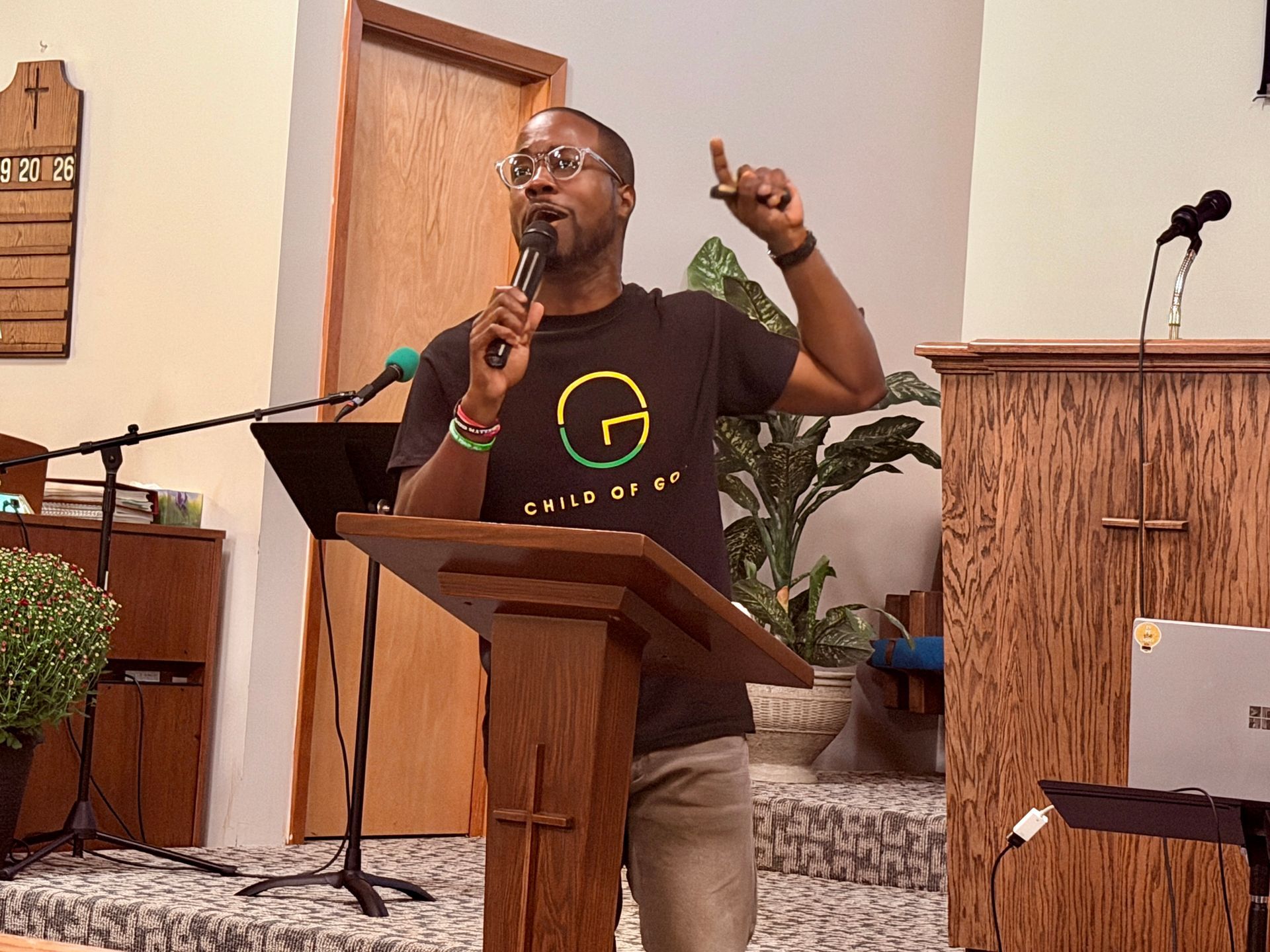
CENTERVILLE, Ohio — Centerville Seventh-day Adventist Church is preparing to welcome hundreds of community members during Ignite Ohio, a statewide evangelistic initiative bringing together 28 Ohio Conference churches for simultaneous proclamation and community outreach from September 19–26, 2026. Centerville’s local “Truth Revival” series will be held September 20–25 from 6:30 to 7:30 p.m., with dinner served at 6 p.m. The featured speaker will be Pastor Leonard A. Johnson, a native of the Bahamas who lives in Maryland and serves as a general vice president of the General Conference of Seventh-day Adventists. For Michael Goetz, lead pastor of Centerville Church, the initiative carries personal significance because an invitation extended to his mother ultimately influenced the direction of his own life. “I am here because somebody invited my mother to come hear the gospel,” Goetz said. “I’m a Christian and a Seventh-day Adventist because of that.” When the Ohio Conference invited Centerville to join churches across the state in simultaneously sharing the gospel and addressing community needs through compassion ministries, the congregation responded without hesitation. The Ohio Conference provided participating churches with financial and organizational resources, decision coordinators and guest speakers. Goetz told the congregation that he has seen God guide the process and bring the right people together at the right time. During Centerville’s final preparations, Johnson encouraged members to support the meetings through what he called the “three Ps”: prayer, presence and participation. “We need the presence of the Holy Spirit to guide us as we meet,” Johnson said. “Without the presence of the Holy Spirit, these meetings will not be effective.” He asked members not only to pray but also to attend the meetings, encourage one another, and invite others. “Encourage someone to come, bring someone along, say a positive word, and together we will uplift Jesus Christ,” Johnson said. About 900 people have preregistered for the Centerville series, with approximately 200 indicating plans to attend the opening night. Organizers acknowledge that not everyone who registered may attend. Still, church leaders view the response as an important opportunity to build relationships and support those seeking a closer connection with God. Ruth Rivera Turnewitsch, a pastor and military chaplain, will serve as the series’ decision coordinator. “We want to collaborate and work together with you,” Turnewitsch told the congregation. “We invite you to be present and engaged. Some may decide to connect with God, request Bible studies, or build friendships with people who share Christian values.” Goetz emphasized that this partnership begins with genuine hospitality. He urged members to move beyond familiar social groups and intentionally sit with people they do not know. “Come and connect,” Goetz said. “Don’t hide away in the recesses of the building or in the balcony; come and engage. If there is somebody you don’t know, that is the person you should sit beside. Ask about their life, find out who they are, and let them know you care.” Everyone attending the meetings, including Centerville members, will register upon arrival. Members were asked to register alongside the guests they invite and to complete the nightly decision cards, setting an example of participation while helping the response team distinguish members from visitors. Registered guests may receive tickets for giveaways, including gas cards and grocery baskets. Completed decision cards will also be entered into drawings on the following evening for prizes that include household items and gift cards for Spring Valley Academy’s upcoming fall festival. Prayer will remain central throughout the series. Each evening, selected attendees will receive cards containing Bible promises. Those receiving a card will serve as prayer partners, claiming the promise from their seats as they pray for the speaker, the message, and those considering spiritual decisions.  Through prayer, personal invitations, compassionate service, and intentional follow-up, Centerville’s leaders hope the initiative will become more than a week of meetings. Their goal is to help visitors experience genuine care, meaningful Christian community, and the transforming hope of Jesus Christ.
ALL STORIES

STAY UP TO DATE

GET CONFERENCE'S LATEST

Receive monthly updates from the conference, and get a heads up on upcoming events.

Contact Us